Everyone goes to Hongdae. Not everyone finds Yeonnam-dong.
It's just a 10-minute walk east from Hongdae's main street, but the atmosphere is completely different. The crowds thin. The streets narrow and quiet down. Tree-lined paths replace neon signs. Independent bookshops and ceramics studios appear between the cafés. And running through the middle of it all, like a green thread stitched through the city, is the Gyeongui Line Forest Park — a former railway turned into a walking path that locals know and tourists mostly miss.
This is Seoul at its most livable. Here's how to spend a day here.
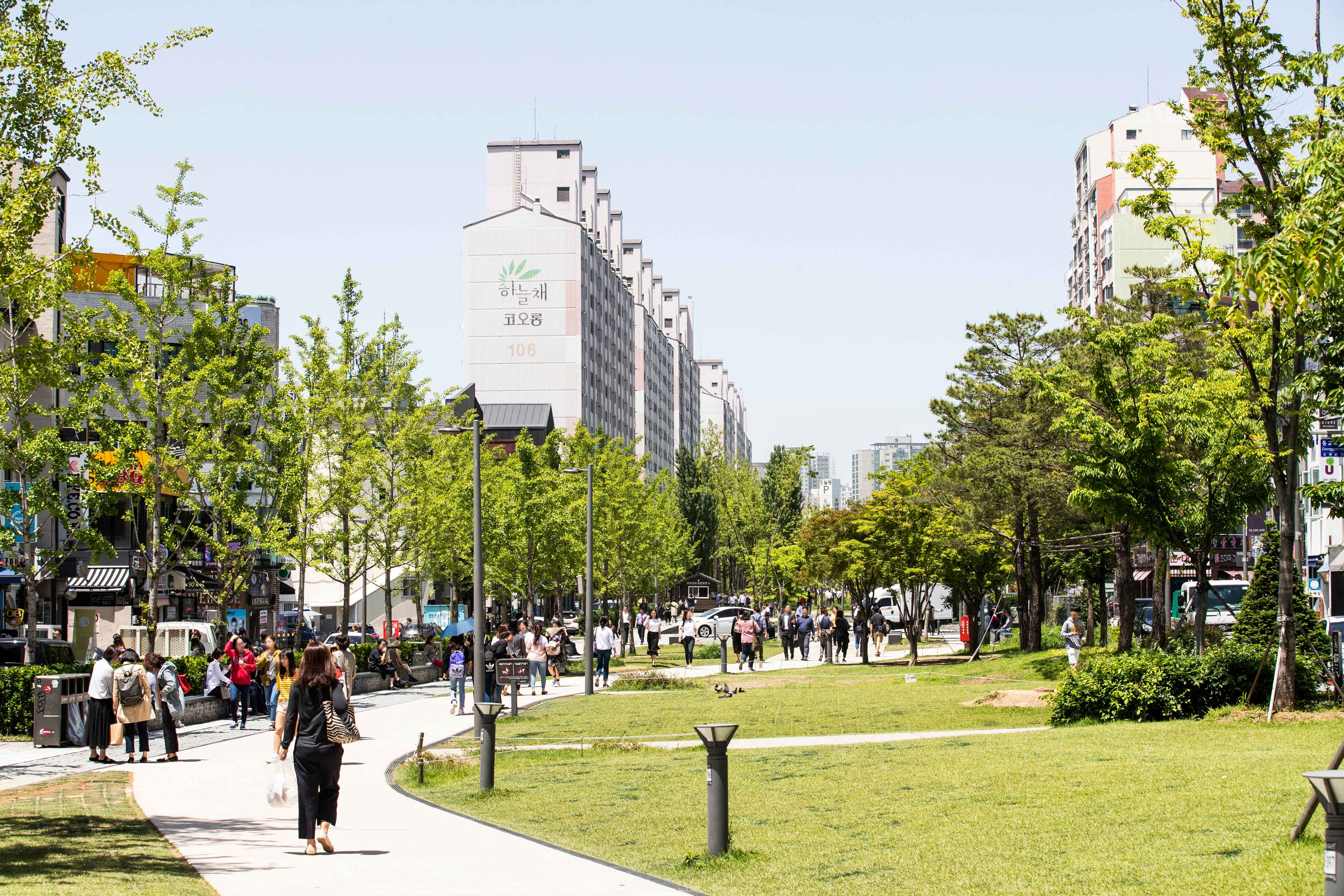
🌳 Gyeongui Line Forest Park (경의선 숲길)
In 1929, the Danginri Line was built to transport coal through this part of Seoul. The tracks ran through what would eventually become Hongdae and Yeonnam-dong. By the time the line was decommissioned, the neighborhood had grown up around it — and when the tracks were finally removed, the city converted the old railway into a linear park stretching over 6 kilometers.
Today, the Gyeongui Line Forest Park is one of Seoul's best-kept secrets among international visitors. Tree-lined, car-free, dotted with benches and small pavilions, it runs from Hongik University Station all the way through Yeonnam-dong toward the northern neighborhoods. In spring, the trees are in full leaf and the path is scattered with fallen petals.
What to Do Along the Path
- Walk or cycle — The path is flat, wide, and beautiful. Rent a bike at one of the stations along the park or just walk. The first kilometer through Yeonnam-dong is the most interesting.
- Gyeongui Line Book Street — About 10 small bookshops and kiosks line a quiet section of the park. Browse Korean and some foreign language books, pick up a local zine, or just enjoy the atmosphere of outdoor reading culture.
- Picnic — Locals spread out blankets and eat convenience store food along the park on spring afternoons. Join them. There are plenty of spots.
- Street art — The walls and fences along the park are covered in murals ranging from whimsical to serious. Good for photos and for understanding Hongdae's indie art roots.
📍 Access: Exit 3 of Hongik University Station (Line 2), walk east toward the park.
🔗 Visit Seoul — Gyeongui Line Forest Park
🏘️ Yeonnam-dong: The Neighborhood
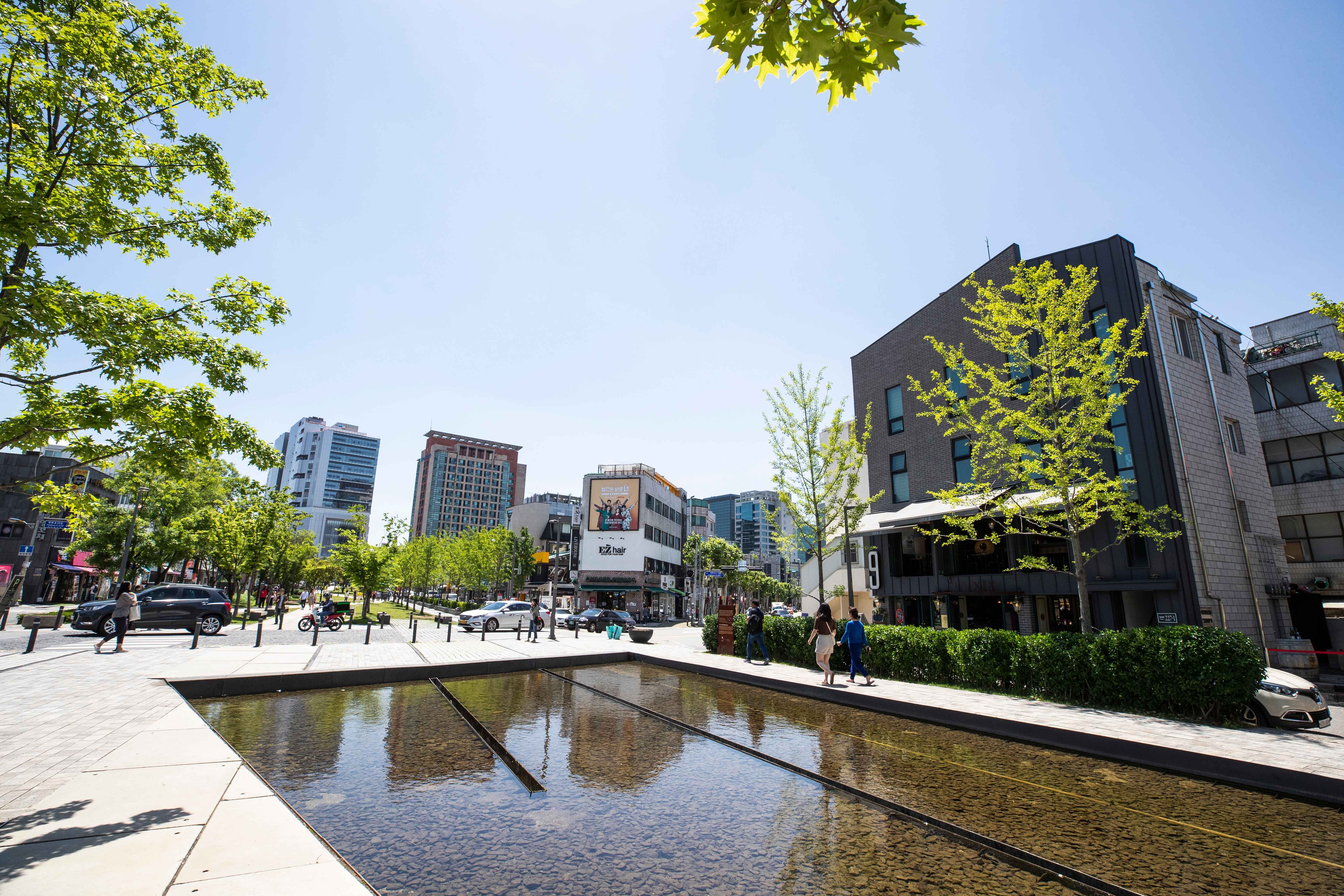
Yeonnam-dong is what Hongdae used to be before it got famous. The artists and musicians who gave Hongdae its original edge gradually moved here as rents rose — and they brought the creative spirit with them, along with slightly lower prices and a distinctly more local atmosphere.
What Makes Yeonnam-dong Special
- Independent cafés — Not chains, not Instagram-first concept spaces, but genuine neighborhood cafés run by people who care about their coffee. Many have courtyard seating that fills up on spring afternoons.
- Chinese food scene — Yeonnam-dong has Seoul's best and most authentic Chinese restaurants, many run by Korean-Chinese families for decades. A completely unexpected pleasure in a neighborhood better known for cafés.
- Indie bookshops & design studios — The creative businesses that moved here from Hongdae gave Yeonnam a distinct intellectual flavor you won't find in more commercial neighborhoods.
- Vintage stores — Several excellent secondhand shops, particularly for clothing and vinyl records, hidden in the side streets.
☕ Best Cafés in Yeonnam-dong & Along the Park
The cafés here are less about being seen and more about being good. A few worth finding:
- Cafés along Yeonnam-ro — The main café strip runs parallel to the park. Walk the whole length before deciding where to sit — each has a different character.
- Side street cafés — Always better than the main street options. Quieter, cheaper, often run by the owner.
- Morning visits — On weekdays before 10 AM, you can have the park and most cafés essentially to yourself. The light through the trees at this hour is genuinely beautiful.
🍜 Where to Eat in Yeonnam-dong
- Yeonnam-dong Chinese restaurants — Look for places that have been here for years, with menus in Korean only and older Korean-Chinese clientele. The jjajangmyeon (black bean noodles) and tangsuyuk (sweet and sour pork) here are the real thing.
- Korean neighborhood restaurants — Small family-run places serving classics: doenjang jjigae, bibimbap, grilled pork. Significantly cheaper than the tourist areas nearby.
- Bakeries — Several excellent independent bakeries operate along the park. Salt bread and croissants to eat while walking.
🗺️ Suggested Walking Route
- Start: Hongik University Station, Exit 3
- Enter the Gyeongui Line Forest Park → walk east
- Browse the Gyeongui Line Book Street
- Turn into Yeonnam-dong side streets — wander freely
- Coffee break at an independent café
- Lunch at a Chinese or Korean neighborhood restaurant
- Return along the park to Hongdae for evening activities
Total time: 3–4 hours at a leisurely pace, or a full half-day if you explore deeply.
💡 Practical Tips
| Best season | Spring (April–May) — the park is at its most beautiful |
|---|---|
| Best time | Weekday mornings — weekend afternoons get crowded near Hongdae |
| Getting there | Line 2 / AREX → Hongik University Station, Exit 3 |
| Budget | Very affordable — neighborhood cafés and restaurants are cheaper than tourist areas |
| Combine with | Hongdae shopping / Hapjeong bars in the evening |
Yeonnam-dong and the Gyeongui Line Forest Park are what happen when a city takes an old railway and gives it back to the people who live near it. Trees where there were tracks. Cafés where there were warehouses. Families picnicking where coal cars once ran.
It's one of Seoul's quietly perfect places. Find it before everyone else does. 🌳
#YeonnamDong #GyeoguiLinePark #SeoulHidden #SeoulWalk #SeoulNeighborhoods #HongdaeSeoul #SeoulTravel #VisitSeoul #SeoulLocal #SeoulPark #KoreaTravel #SeoulLife #SeoulCafe #TravelKorea #SeoulSpring #SeoulGuide #HiddenSeoul #SeoulOff TheBeat #AsiaTravel #SeoulAndSoul
📷 Photo: Korea Tourism Organization (phoko.visitkorea.or.kr)
'Seoul Neighborhoods' 카테고리의 다른 글
| Yeouido Spring Flower Festival 2026: The Ultimate First-Timer's Guide (0) | 2026.04.09 |
|---|
